
Indiana Conservation Voters and Citizens Action Coalition Unveil Policy Plan to Lower Energy Costs for Hoosiers
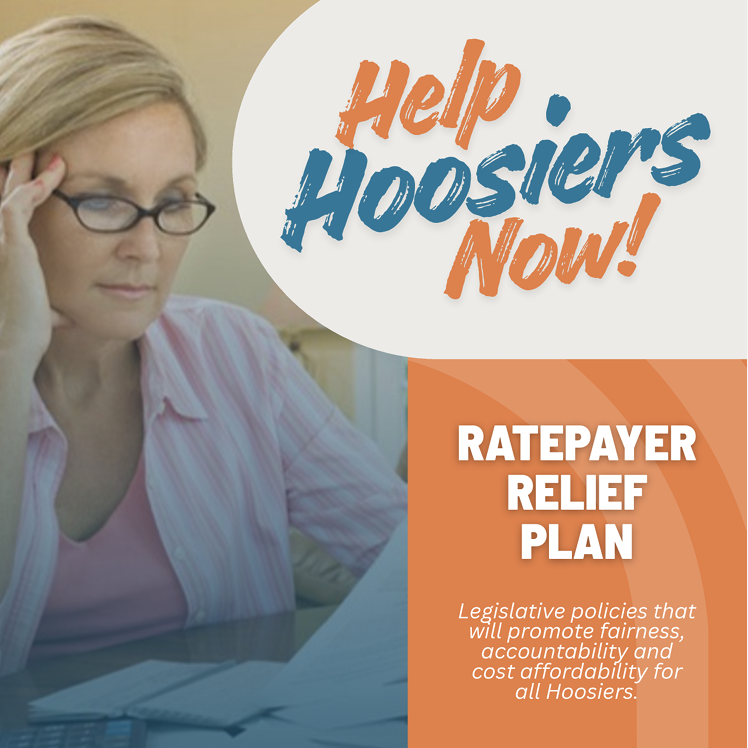
INDIANAPOLIS—As families across Indiana struggle under some of the highest utility bills in the Midwest, Indiana Conservation Voters (ICV) and the Citizens Action Coalition (CAC) today announced a new Help Hoosiers Now: Ratepayer Relief Plan to address Indiana’s worsening energy affordability crisis.
The organizations urged state lawmakers to prioritize meaningful, immediate relief for ratepayers during the 2026 legislative session while also enacting long-term reforms that will stem rising costs for years to come and provide Indiana with a reliable framework for future energy needs.
A recent federal report predicted Indiana electric bills will go up by 16.3% in 2025. A CAC analysis released earlier this year found Indiana’s monopoly utilities have imposed the most severe electric bill increases on residential customers in at least two decades, with some families paying nearly $50 more a month than just one year ago.
The energy affordability plan outlines a roadmap for legislators to bring costs down now and prevent unnecessary price hikes in the future. All of the policies outlined in the plan share a common goal: ensuring Hoosiers are no longer stuck paying the price for utility-friendly policies and a lack of affordable energy choices.
“Hoosier families are stretched thin, and they need relief now from monopoly utilities who’ve pushed policies for years that led to this crisis,” said Megan Robertson, executive director of Indiana Conservation Voters. “This plan gives state leaders a clear, practical path to lower bills that will protect Hoosiers most in need and build a more affordable, reliable energy future for every community in our state.”
The Ratepayer Relief Plan includes a mix of short- and long-term solutions, including proposals that help at-risk families avoid dangerous shutoffs; prohibit utilities from passing along unnecessary costs; expand community energy options; strengthen regulatory oversight; and ensure monopoly utilities cannot unfairly shift their financial risk onto ratepayers.
“For too long, Hoosiers have been footing the bill for decisions they didn’t make and policies they didn’t ask for,” said Kerwin Olson, executive director of Citizens Action Coalition. “Indiana’s regulatory system should be built to protect consumers, but that goal can only be achieved if lawmakers give regulators the tools and authority it needs. The solutions have been ready for years. The need is now incredibly urgent, and we hope lawmakers will do their part.”
The full Help Hoosiers Now: Ratepayer Relief Plan is available here.
###
About Indiana Conservation Voters
Indiana Conservation Voters is a statewide advocacy organization dedicated to advancing clean air, clean water and clean, reliable energy for all Hoosiers through public engagement and strong policy.
About Citizens Action Coalition
Citizens Action Coalition is Indiana’s oldest and largest consumer and environmental advocacy organization. Since its inception in 1974, CAC has helped to save Hoosiers more than $10 billion in excess utility charges.
HELP HOOSIERS NOW: RATEPAYER RELIEF PLAN
LEGISLATIVE POLICIES THAT PUT PEOPLE BEFORE PROFITS
Hoosiers are paying some of the highest energy bills in the Midwest, and nearly nine out of 10 of Indiana residents said in a recent poll they are concerned about rising utility costs, with 57% reporting they are very concerned. Families, seniors, renters, small business owners—everyone is feeling the pain.
This package provides legislators with policies they can take action on immediately, listed in order of how quickly they will affect Hoosiers. Each policy has a clear consumer benefit and will provide much-needed relief at a time when inflation and economic concerns are top of mind across our state and nation.
POLICY: Establish a Low-Income Discount Rate
This policy provides relief to those most in need, especially those on fixed incomes, by establishing a required discount rate for each investor-owned utility for qualifying low-income ratepayers.
What this means for your bill: direct discounts tied to need → keeps lights on without penalty pricing.
Introduced Bills:
- HB 1002 Energy Affordability: Establishes a Low-Income Customer Assistance Program
- Authors: Shonkwiler – R, Soliday – R, Pressel – R
- SB 152 Utilities Matters: Allows an electric or gas utility to establish a customer assistance program for qualified residential customers.
- Author: Hunley – D, Ford – D, Spencer – D
- SB 266 Base Rate Cases For Electricity Suppliers. Requires the IURC to consider if a rate increase would result, upon full implementation, in an average monthly residential bill that would represent more than 6% of a representative low income customer’s monthly income
- Author: Pol – D
POLICY: Prohibit Summer Shutoffs for LIHEAP Households
This legislation was introduced in 2024 and would prevent an electric or gas utility from terminating residential electric or gas service for an individual who is eligible for and has applied for assistance from the state’s home energy assistance program. State law currently prevents shutoffs for unpaid bills from December 1 through March 15 but not during the summer.
What this means for your bill: fewer reconnection charges + prevents people from falling into deeper debt because offices are closed.
Introduced Bills:
- SB 153 Utility Disconnections And Customer Data Reports: Prohibits utilities from terminating service from June 21 through September 23 if they qualify and applied for energy assistance
- Authors: Jackson – D
- HB 1002 Energy Affordability: Utilities may not terminate services during extreme heat days
- Authors: Shonkwiler – R, Soliday – R, Pressel – R
- HB 1111 Various Utility Matters: Utilities may not terminate residential electric or gas service between June 21 and September 23 for residential customers whose residence includes a person who is over 65 years of age or younger than 16
- Author: Pryor – D
POLICY: Reform IURC Approval Over Mergers and Acquisitions
Right now, our public utilities can be bought or merged with other companies with very little independent oversight. Reforming the IURC’s jurisdiction concerning any merger or acquisition of our public utilities or their parent companies increases transparency and potentially limits financial consequences on consumers.
What this means for your bill: prevents utilities from shifting risky acquisition costs onto households.
Introduced Bills:
- HB 1186 Restrictions On The Sale Of Public Utilities: Prohibits a public utility to sell their business to a private equity firm
- Author: Cash – R
- SB 152 Utilities Matters: Requires the approval of the IURC before a public utility may sell stock, enter into certain contracts, effect a reorganization, or acquire control of another public utility.
- Author: Hunley – D
POLICY: Ban Rate Recovery for Lobbying, Politics and Public Relations
Under this policy, the IURC may not authorize utility rate recovery for activities related to lobbying, legislative action, political activities, charitable giving, trade association expenses, litigation and investor relations. It also requires utilities to file annual reports related to those activities and directs the IURC to make those annual reports public.
What this means for your bill: you stop paying hidden pass-throughs for utility political influence campaigns.
Introduced Bills:
- SB 152 Utilities Matters: Bans rate recovery of any direct or indirect costs associated with specified expenses and activities related to lobbying, legislative action, political activities, charitable giving, litigation, investor relations, and other specified activities and expenses
- Author: Hunley – D, Ford – D, Spencer – D
- SB 234 Energy Utilities Matters: Bans rate recovery of any direct or indirect costs associated with specified expenses and activities related to lobbying, legislative action, political activities, charitable giving, litigation, investor relations, and other specified activities and expenses
- Author: Becker – R
POLICY: Repeal or Reduce Cost Trackers
Cost trackers directly increase electric bills by allowing utility companies to adjust rates to recover costs outside of standard rate cases. Fluctuations are passed on to consumers. Repealing or reducing these trackers would provide more stability in monthly bills and require utilities to go through the rate case process to pass along these costs.
What this means for your bill: ends automatic cost pass-throughs → more scrutiny before costs are added to your bill.
Introduced Bills:
- SB 146 Electric Utility Affordability; TDSIC Plans: Reforms and adds transparency to the Transmission, Distribution, and Storage Improvement Charge (TDSIC) Tracker
- Author: Niemeyer – R, Dernulc – R
POLICY: Authorize Community Energy
Community energy answers rising energy demand by quickly deploying eligible energy-generating resources close to where power is needed. Families, businesses and other utility customers can voluntarily subscribe to receive credit on their utility bill for a share of the power produced.
What this means for your bill: renters and households that can’t embrace their own energy solutions can access cheaper power options.
Introduced Bills:
- SB 196 Community Energy Facilities: Authorizes Community Energy
- Author: G Walker – R
POLICY: Elect or Require Confirmation of IURC Commissioners
This policy would require that IURC commissioners be elected, either by district or at-large, or require legislative confirmation of the Governor’s appointments. Currently, all five commissioners are appointed by the Governor without legislative confirmation.
What this means for your bill: decisions become accountable to voters → downward pressure on allowed utility costs.
Introduced Bills:
- HB 1068 Retention Of IURC Commissioners: Sets election retention requirements for the commissioners of the IURC with voter approval in a general election.
- Author: Moseley – D
- HB 1433 Election Of IURC Commissioners: Requires for nonpartisan election of the five members of the IURC beginning with the 2026 general election. It also restricts campaign contributions from a utility.
- Author: Moed – D
- SB 114 Election Of IURC Commissioners Requires nonpartisan elections of the five members of the Indiana utility regulatory commission (IURC)
- Author: Tomes – R
POLICY: Limit Utility Profit Rates (Rate of Return = Cost of Capital)
This policy requires that the IURC set a utility’s rate of return equal to its cost of capital.
What this means for your bill: caps monopoly profit margins → directly restrains cost increases.
Introduced Bills:
- HB 1002 Energy Affordability: Establishes performance incentive metrics tied to a utilities authorized return. Utilities may earn more or less return based on their performance.
- Authors: Shonkwiler – R, Soliday – R, Pressel – R
POLICY: Review Data Center Policies and Impacts to Ratepayers
Data centers can be massive energy and water users/consumers. The added energy demand everywhere is causing energy bills to spike because large users are trying to buy all the energy they can get without waiting for new supply to be built. Indiana should revisit its policies to make sure our state, local communities, and Hoosier households thrive, not buckle, under the AI boom.
What this means for your bill: avoid water and energy cost shift + make sure local communities get all of the tax dollars.
Introduced Bills:
- SB 234 Energy Utility Matters: Requires all large load customers, such as data centers, to cover all of their costs
- Author: Becker – R
- SB 257 Electricity Rate Increases Due To Data Centers: Prohibits rate increases for data centers
- Author: Garten – R
- SB 79 Data Center Development: Requires data centers to submit quarterly electricity usage reports for public review. Requires data centers to disclose energy and water usage to local authorities.
- Author: Ford – D
- HB 1043 Data Center Water Regulation: Requires data centers to obtain a water consumption permit
- Author: Burton – D
- HB 1104 Nondisclosure Agreements In Economic Development: Prohibits NDAs in economic development agreements such as data centers
- Author: Greene – R
- HB 1245 IURC Study Of Data Centers: Requires IURC to conduct a study to evaluate the effect of new and additional electricity demand from data centers and large load customers on the costs incurred by energy utilities to meet that demand and retail electric rates for all customers.
- Author: Shackleford – D
POLICY: Require Large Industrial Users to Participate in Efficiency Programs
This policy requires the biggest energy users—factories, large manufacturers, big data facilities—to participate in and help pay for utility-led energy efficiency programs. Requiring the largest energy users to do their part means overall system demand goes down and utilities don’t need to build as much expensive capacity.
What this means for your bill: reduces system-wide demand → lowers long-term generation and transmission cost pressure.
POLICY: Statewide Siting Reform
Statewide siting reform would replace Indiana’s county-by-county patchwork with a clear, uniform process that gives developers and their community partners certainty. A predictable, statewide framework would set a single standard for responsible development while preserving local input on design and mitigation. This would speed up timelines, unlock private capital and ensure low-cost, clean generation can actually get built.
What this means for your bill: Solar and wind are among the cheapest energy sources; being able to quickly bring new projects online means more energy will be available at a lower cost.