
New calculator reveals how much Indiana utilities profit from Hoosiers’ electric bills
INDIANAPOLIS—Hoosiers are growing increasingly frustrated with their unaffordable energy bills, yet customers of the state’s five investor-owned utilities remain in the dark about how much of their power bill goes directly to corporate profits.
To help provide customers with greater transparency, the utility watchdog Energy and Policy Institute (EPI) has launched UtilityProfitTracker.org, an easy-to-use calculator that estimates the amount of profits in a customer’s electric bill.
Here’s how much estimated profit is going from a customer’s bill to each of Indiana’s five monopoly utilities:
- NIPSCO: 19.7%
- Duke Energy Indiana: 14.7%
- Indiana Michigan Power (I&M): 13.7%
- Centerpoint: 11.2%
- AES Indiana: 4.5%
To use the calculator, customers simply input their monthly bill amount and the name of their utility company to generate the profit estimate. Drawing on publicly available financial filings, the new tool helps households understand their rising electric bills as utilities draw record profits year over year.
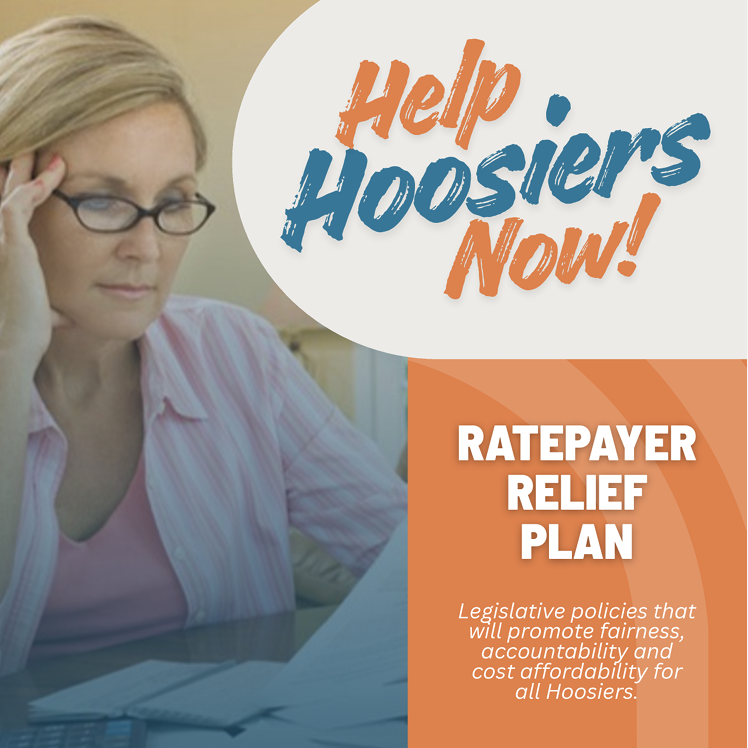
Families across Indiana have been struggling with some of the highest utility bills in the Midwest, which led Indiana Conservation Voters and Citizens Action Coalition to release the Help Hoosiers Now: Ratepayer Relief Plan in December.
Some elements of the ratepayer relief plan were included in House Bill 1002 this legislative session. Unfortunately, that legislation left many long-term, foundational policy solutions—statewide permitting reform, energy efficiency and a ban on utilities using ratepayer funds for lobbying expenses—on the cutting room floor.
“While we’ve seen some initial steps in the right direction at the Statehouse, we cannot stop here,” said Indiana Conservation Voters Executive Director Megan Robertson. “We must ensure that our energy policy serves consumers, not the interests of utility shareholders who are seeing their wealth grow while Hoosiers have to choose between paying for electricity, food or prescriptions.”
The push for increased transparency comes as new data highlights more cost-effective paths for the state’s energy future. According to a recent report from Advanced Energy United, accelerating clean energy development in Indiana—including wind, solar and battery storage—could significantly lower consumer costs compared to maintaining the status quo of fossil fuel reliance. The report highlighted that transitioning to advanced energy resources both stabilizes the grid and protects Hoosier pockets from the volatile pricing of traditional fuel sources.
“The good news for Hoosiers is that we don’t have to keep choosing between high bills and clean energy,” Robertson said. “Moving toward wind, solar and battery storage is not only a path to a stable grid, but a proven way to lower consumer costs and prevent monopoly utilities from continuing to rake in record profits.”
###
About Indiana Conservation Voters
Indiana Conservation Voters is a statewide advocacy organization dedicated to advancing clean air, clean water and clean, reliable energy for all Hoosiers through public engagement and strong policy.